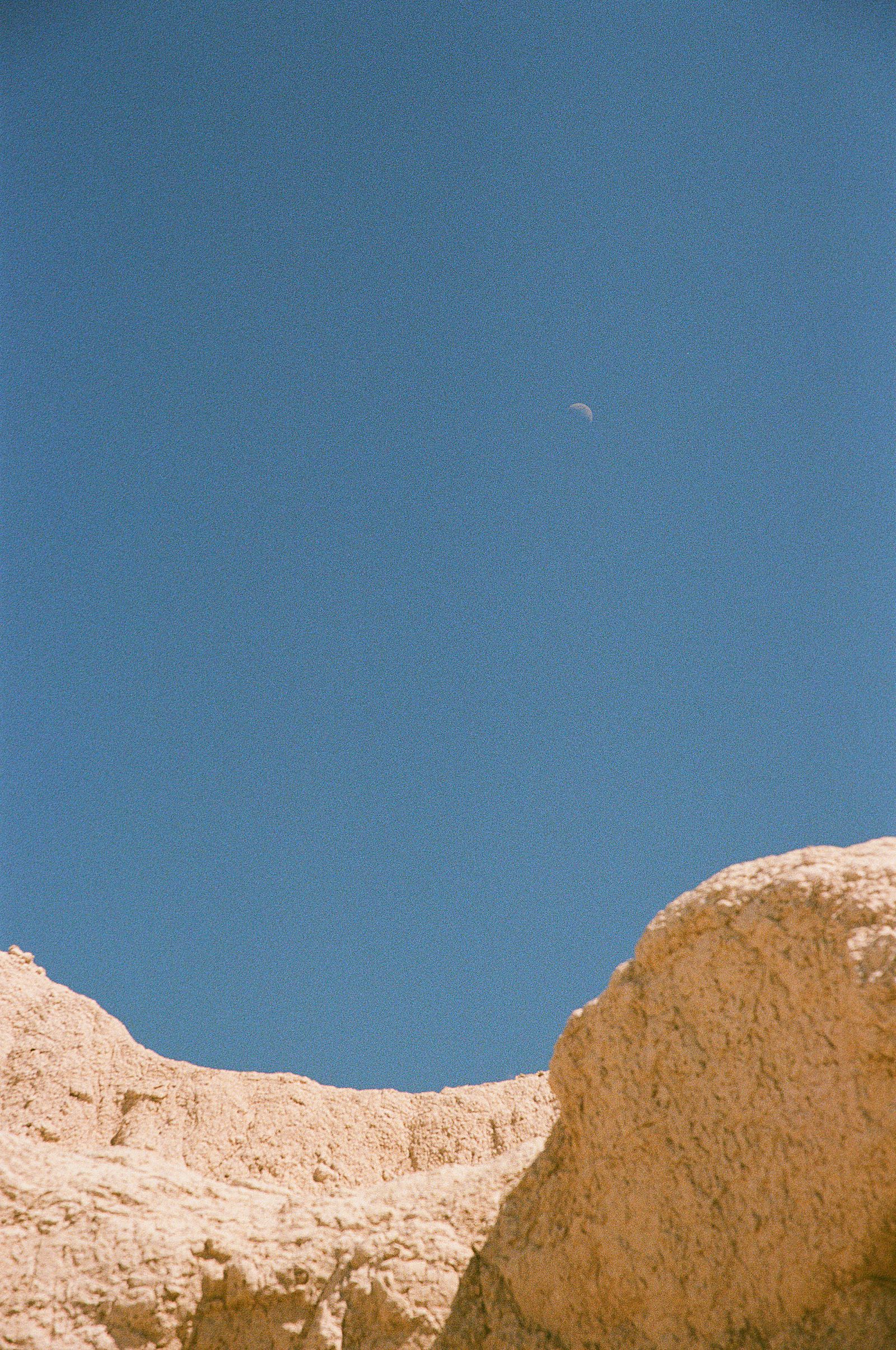
The Ultimate Badlands National Park Guide
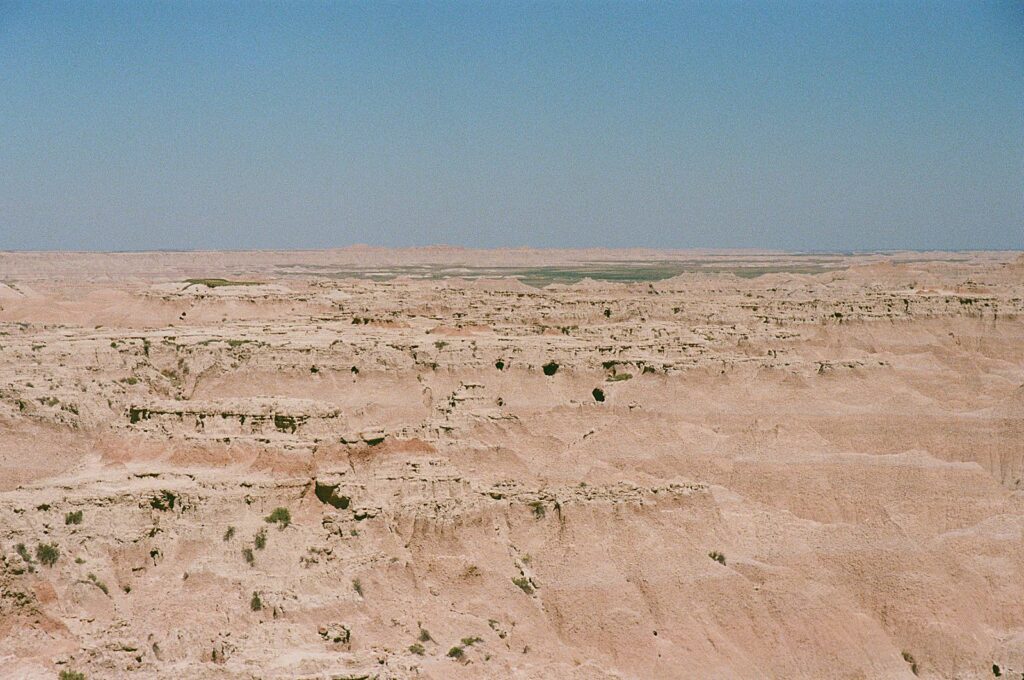
1. Start Here: A Local’s Guide to Badlands National Park
Badlands National Park is one of the most striking destinations in South Dakota. As a local photographer based in the Black Hills, I have spent years exploring its ridges, gullies, overlooks, and prairies in every season. I have watched the sun rise over the formations in soft pastels, seen bison grazing in the evening light, and witnessed storms roll in across the open plains. Each visit feels different, and each day reveals details you may not have noticed before.
This guide was created to help you understand the layout of the park, how to plan your time, what to expect from the weather, where to stay, which hikes to choose, and how to craft an itinerary that fits your travel style. Whether this is your first visit or your tenth, the Badlands offer something new to discover every time.
Your complete visitor resource for exploring South Dakota’s most dramatic landscape while enjoying the Badlands captured on film along with various portraits.
Table of Contents
- Start Here: A Local’s Guide to Badlands National Park
- Understanding the Badlands Landscape
- Human History of the Badlands
- Where Is Badlands National Park
- Why the Badlands Got Their Name
- Entrances to Badlands National Park
- Badlands Entrance Fee
- Driving the Scenic Loop Road
- Best Time to Visit Badlands National Park
- Weather by Month
- Seasonal Overview
- Top Things to Do in Badlands National Park
- Best Hikes in Badlands National Park
- Wildlife in Badlands National Park
- Plants and Prairie Ecology
- Badlands Accessibility Guide
- Driving Through the Badlands
- What to Pack for the Badlands
- Food and Dining Availability
- Camping and Lodging Near the Badlands
- How to Get to Badlands National Park
- Mistakes to Avoid in Badlands National Park
- Badlands National Park Itineraries
- Nearby Attractions Close to the Badlands
- Practical Travel Tips for Visiting
- Ready to Plan Your Badlands National Park Trip
2. Understanding the Badlands Landscape
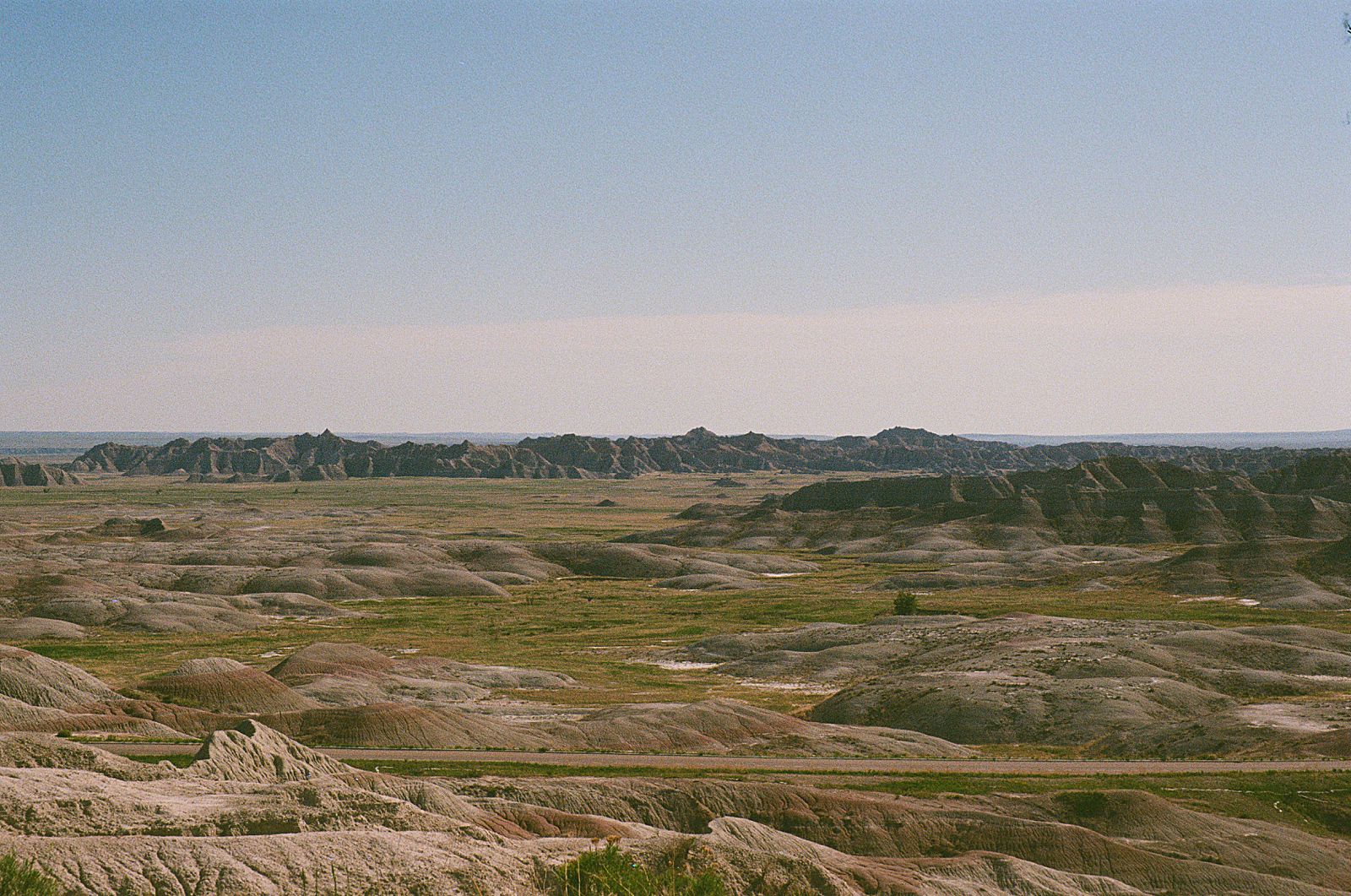
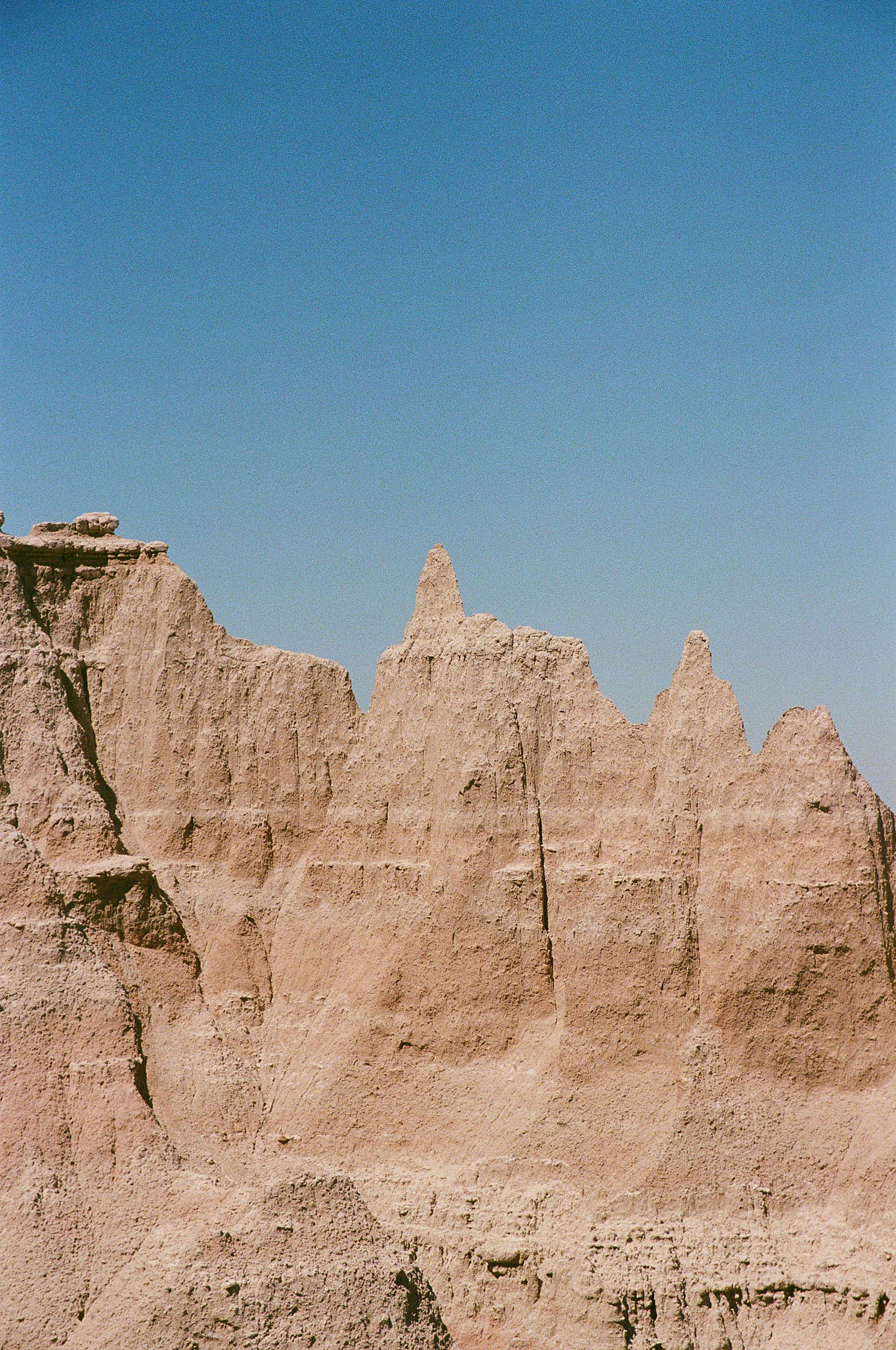
The Badlands are known for their jagged ridges, sharply eroded gullies, colorful sediment layers, and sweeping prairies. The contrast between the formations and the open grasslands creates one of the most unique landscapes in the Midwest.
Erosion and Color
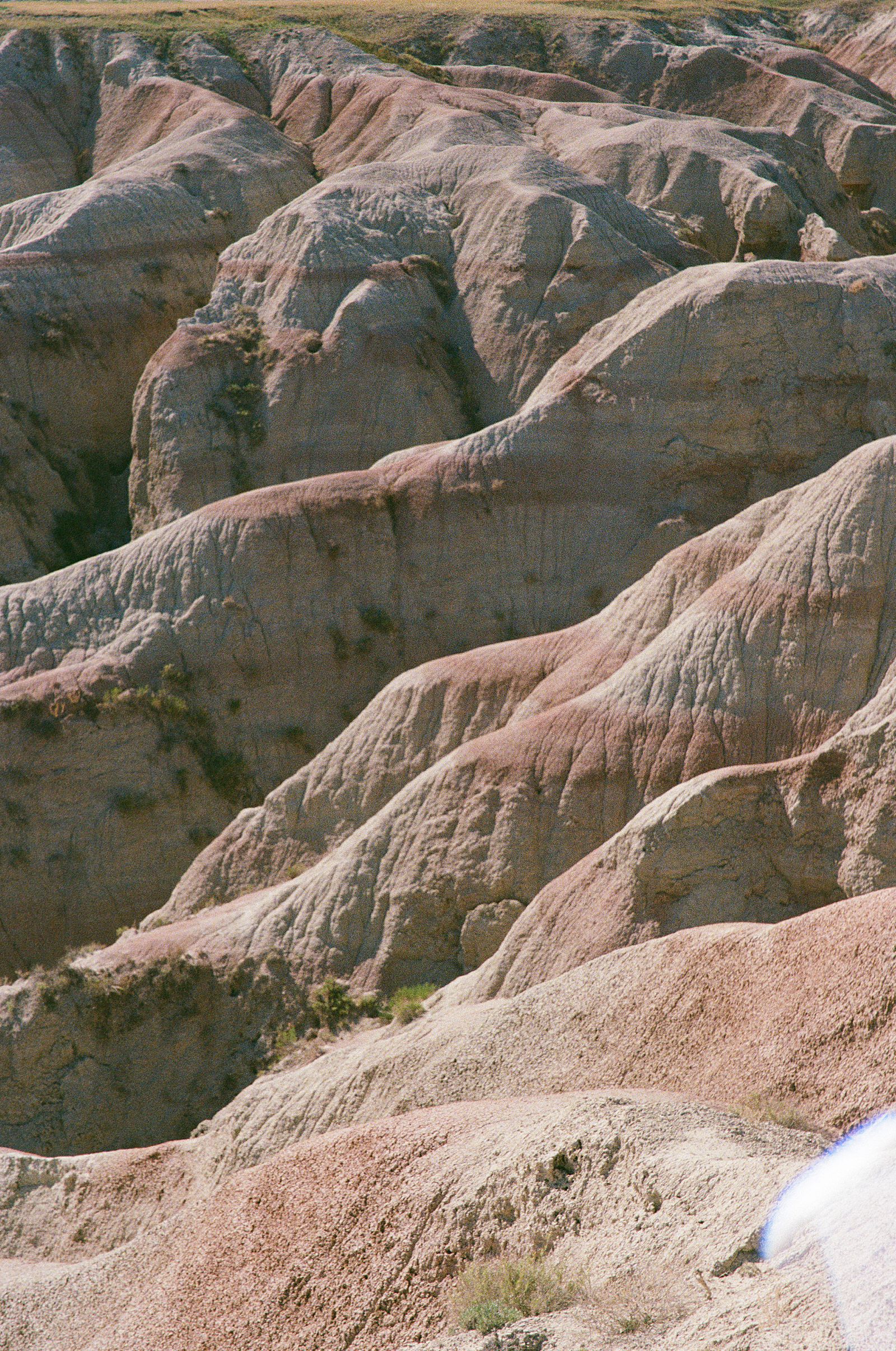
The formations are carved by wind and water, revealing layers of sediment in shades of gray, tan, peach, yellow, and soft red. Lighting dramatically affects their appearance.
- Sunrise creates warm, glowing ridges
- Midday highlights sharp lines and deep shadows
- Overcast days soften the landscape
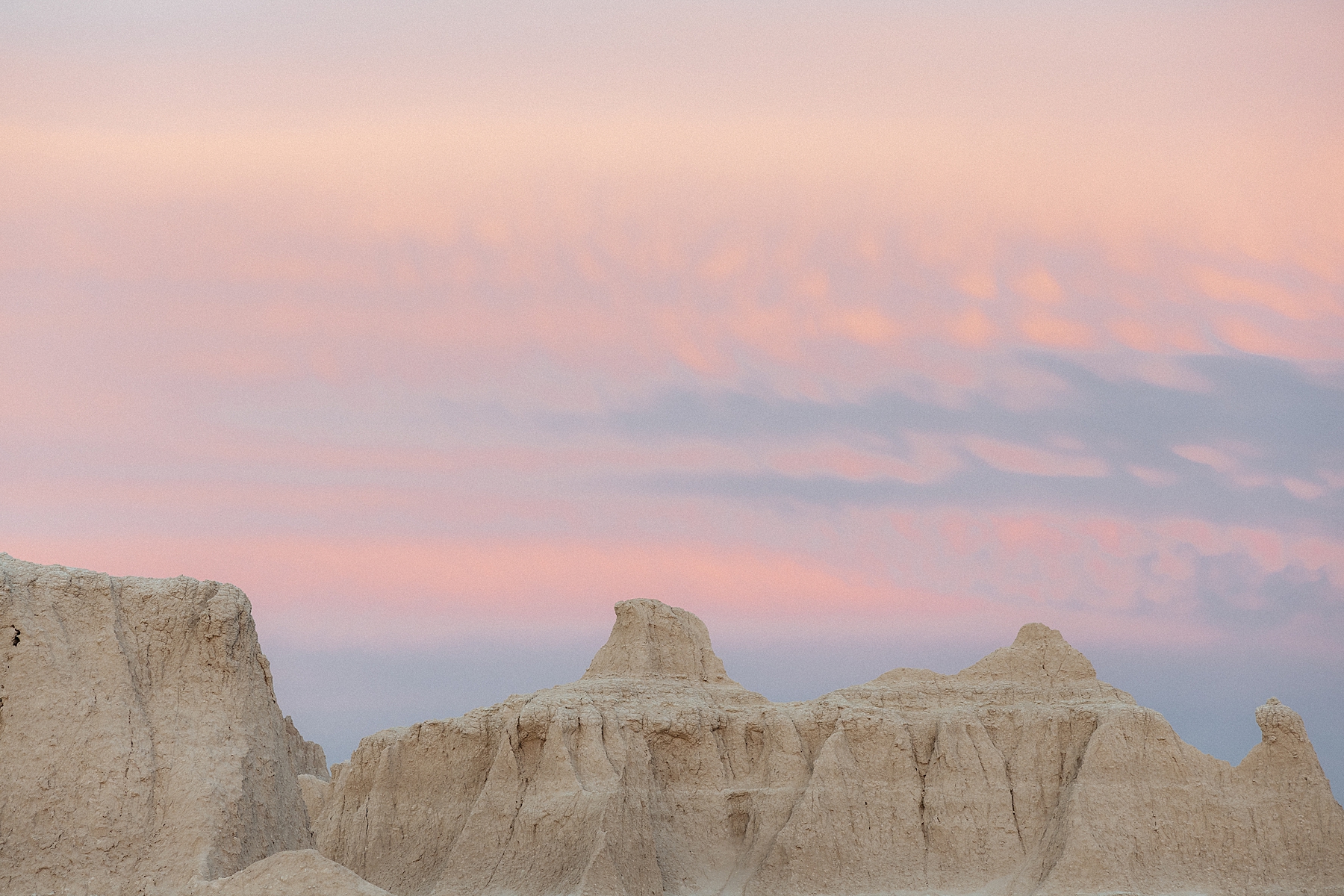
- Sunset fills the formations with rich gold and pink tones
The Prairie
Bordering the formations is the mixed grass prairie, an ecosystem full of movement and life. Grasses turn green in spring, golden in late summer, and muted in winter. This prairie sustains many of the animals the Badlands are known for, including bison, pronghorn, and prairie dogs.
3. Human History of the Badlands
Humans have lived in this region for generations. The Oglala Lakota and other Indigenous communities have deep cultural and historical ties to the land. When you walk through the park today, you are experiencing a place with meaning far beyond its scenic views.
During the 1800s, ranchers and homesteaders arrived, drawn by the open land despite the challenging terrain. In 1939, Badlands National Monument was established, later becoming a national park. The park now protects prairie ecosystems, cultural sites, and one of the richest fossil areas in the United States.
The South Unit of the park lies within the Pine Ridge Reservation and maintains strong cultural connections to the Lakota people.
4. Where Is Badlands National Park
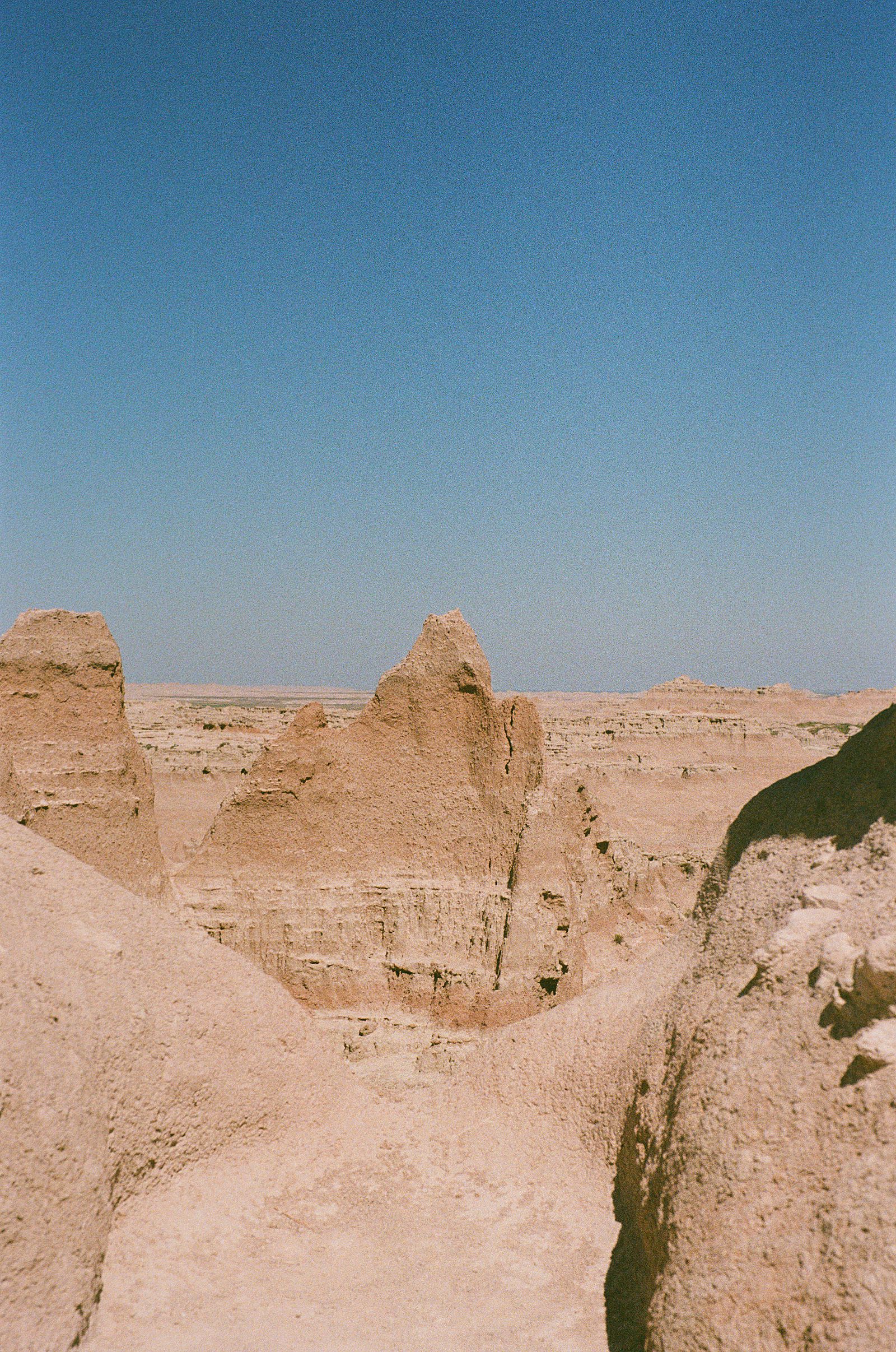
Badlands National Park is located in western South Dakota, about one hour from Rapid City and just minutes from the town of Wall.
Address:
25216 Ben Reifel Road
Interior, SD 57750
The park spans more than 244,000 acres, featuring dramatic formations, open prairie, wildlife habitat, and scenic viewpoints.
5. Why the Badlands Got Their Name
Early French trappers described this area as les mauvaises terres, or bad lands, because of the rugged terrain and scarcity of water. Travel through the region was difficult, especially by foot or horseback. The name remained, but today it represents the wild beauty and challenging landscape that make the area so unforgettable.
6. Entrances to Badlands National Park
Most visitors enter through one of three primary points:
Northeast Entrance
Closest to Wall and ideal for visitors coming from I 90 or the Black Hills.
This entrance leads quickly to Big Badlands Overlook and the Door and Window Trail area.
Pinnacles Entrance
Also near Wall, providing immediate access to Pinnacles Overlook and nearby prairie dog towns.
Interior Entrance
Closest to Ben Reifel Visitor Center, Cedar Pass Lodge, and many trailheads.
A great choice for first time visitors who want to begin with information and amenities.
7. Entrance Fees for Badlands National Park
Badlands National Park requires an entrance pass, which helps support park maintenance, facility improvements, and conservation efforts. Fees are consistent with many other national parks and are valid for seven consecutive days.
Standard Entrance Fees
- Private Vehicle: 30 dollars
Covers all passengers in a single non commercial vehicle for seven days. - Motorcycle: 25 dollars
- Individual (on foot or bicycle): 15 dollars per person
- Non Commercial Group: 15 dollars per person for groups entering by bus, van, or tour organization
Annual and Additional Pass Options
- Badlands Annual Pass: 55 dollars
Provides unlimited entry to Badlands National Park for one year from the month of purchase. - America the Beautiful National Parks Pass: 80 dollars
Valid for one year at more than 2,000 federally managed recreation sites across the United States. A great investment if you plan to visit multiple national parks within the year.
Fee Free Days
Several days each year offer free entry to all national parks, including the Badlands. These typically include:
- Martin Luther King Jr. Day
- National Park Week opening day
- Great American Outdoors Day
- National Public Lands Day
- Veterans Day
These dates vary slightly year to year, so it’s wise to check the National Park Service website before planning your visit.
Where to Purchase Your Pass
Passes can be purchased at:
- Park entrance stations
- Ben Reifel Visitor Center
- National Park Service Website
Digital passes are a convenient option because they allow you to skip payment lines and enter the park more efficiently.
Additional Notes
- All fees are subject to change, but price adjustments are usually announced months in advance.
- If you are visiting during summer months or around popular holidays, buying your pass online before arriving can save time at the gate.
- Entrance fees do not include camping fees, which are handled separately for Cedar Pass Campground and other facilities.
8. Driving the Scenic Loop Road
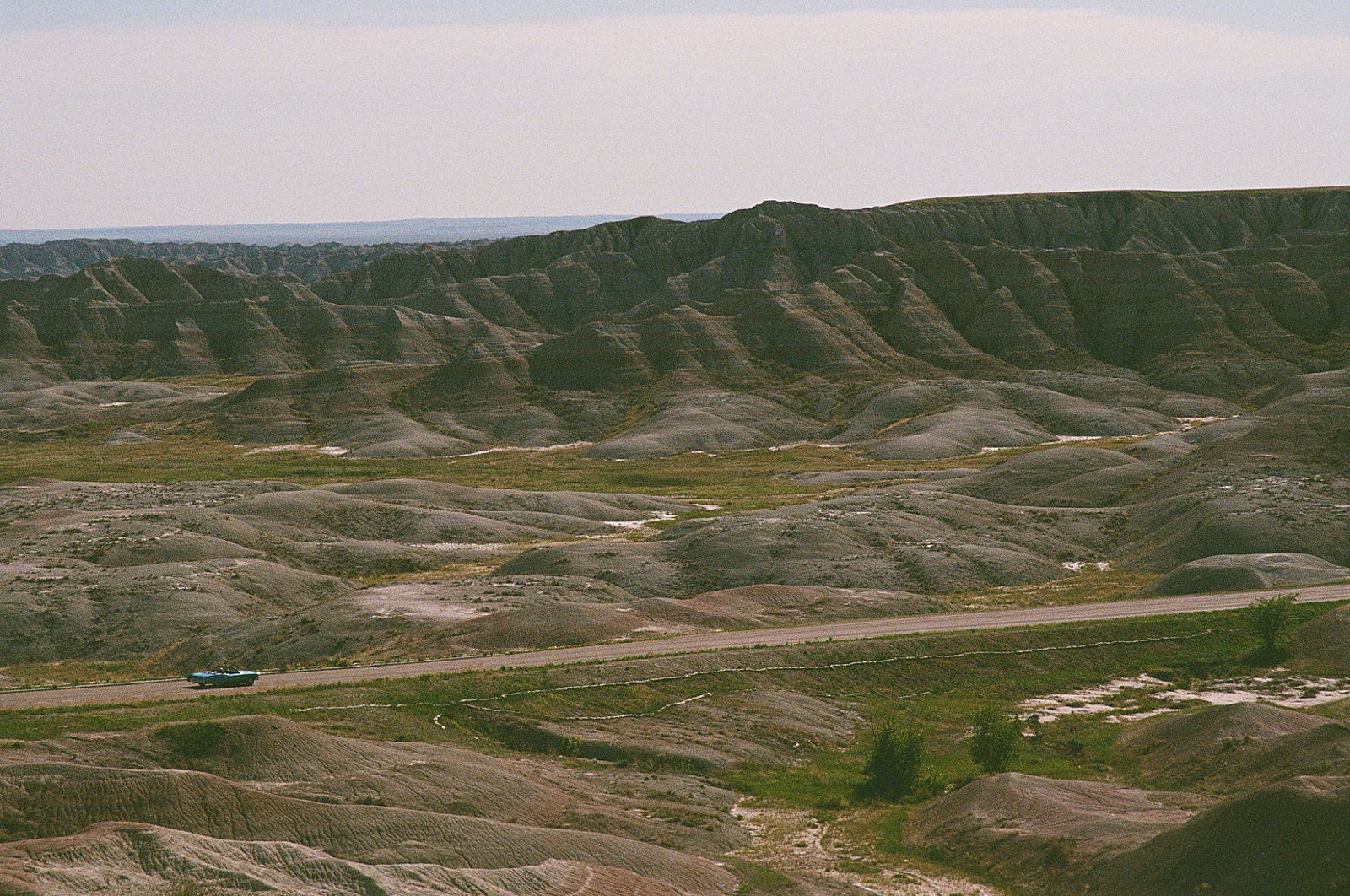
The Scenic Loop Road (Highway 240) is a must do for any visitor. This 39 mile paved route winds through the heart of the park, offering dozens of overlooks, pull offs, and trail access points.
Scenic Highlights Along the Loop
Approximate progression from east to west:
- Big Badlands Overlook
- Door, Window, and Notch Trail area
- Fossil Exhibit Trail
- White River Valley
- Burns Basin
- Panorama Point
- Homestead Overlook
- Conata Basin
- Saddle Pass area
- Pinnacles Overlook
- Prairie dog towns
You can complete the entire loop in a few hours, but many visitors find themselves stopping repeatedly to admire shifting light, wildlife sightings, and changing landscapes.
9. Best Time to Visit Badlands National Park
Badlands National Park is open year round, and each season brings its own personality. Some months offer comfortable hiking weather, while others deliver brilliant sunsets, quiet winter solitude, or vibrant prairie colors. Because temperatures and conditions shift quickly on the plains, it helps to understand the general patterns before planning your trip.
The following month by month breakdown uses average conditions. Weather can vary from year to year, but these numbers offer a helpful starting point.
Badlands Weather by Month
| Month | Average High | Average Low | What to Expect |
| January | 35 F | 13 F | Cold, windy, occasional snow. Quiet trails and crisp scenery. |
| February | 40 F | 17 F | Very cold with periodic storms. Stunning winter sunsets. |
| March | 51 F | 25 F | Early spring mix of rain or snow. Highly variable temperatures. |
| April | 62 F | 35 F | Warming temps, possible storms, fresh prairie color. |
| May | 71 F | 46 F | Mild weather, green prairie grasses, great hiking. |
| June | 82 to 87 F | 55 to 58 F | Warm to hot days, long daylight hours. |
| July | 90 F | 61 F | Hottest month, strong sun exposure, clear evenings. |
| August | 89 F | 60 F | Hot afternoons, calm weather, beautiful sunsets. |
| September | 77 F | 49 F | Ideal temperatures, golden prairie, fewer crowds. |
| October | 61 F | 35 F | Crisp fall air, quiet trails, excellent light for photos. |
| November | 48 F | 25 F | Cool days, cold nights, shifting into winter. |
| December | 36 F | 14 F | Very cold with potential snow. Peaceful winter landscape. |
These conditions give you a sense of what to pack, what to plan, and how to time your activities throughout the year.
Seasonal Overview
Spring
Spring brings a refreshing shift in the landscape. Grasses begin to green, wildlife becomes more active, and temperatures fluctuate between cool and mild. Expect wind, occasional storms, and a mix of sunny and cloudy days. This is an excellent season for hiking and photography thanks to softer light and fewer crowds.
Summer
Summer is the most popular time to visit. Long days allow for extended exploring, but afternoons can be hot, especially on exposed trails. Early mornings and evenings are the most enjoyable times to hike and drive the Scenic Loop. Wildlife sightings are common, and sunsets are especially vibrant. Make sure to watch out for rattlesnakes on the trails this time of year.
Fall
Fall might be the most comfortable season in the park. Temperatures cool, the prairie turns golden, and the air becomes crisp. Trails are quieter, and wildlife activity remains strong. Fall sunsets often illuminate the formations with glowing warm tones.
Winter
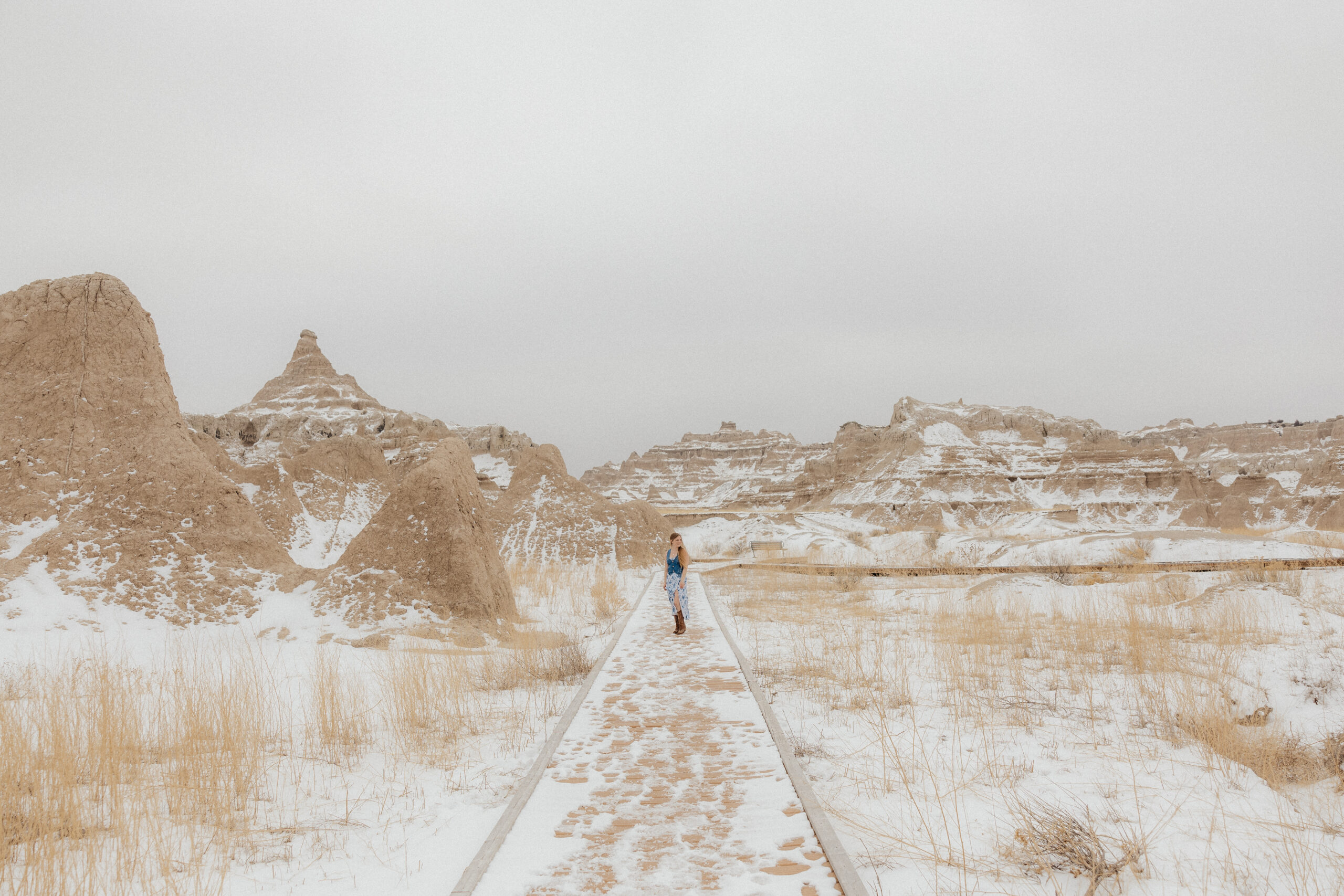
Winter is peaceful and atmospheric. Snow highlights the texture of the formations, and the cold air creates strong visibility on clear days. While services are limited and the weather can be harsh, visitors enjoy having many areas to themselves. It is a beautiful time for stillness, photography, and scenic drives when roads are open. The trails are often snow and ice-covered this time of year, so make sure to wear the proper hiking attire.
10. Top Things to Do in Badlands National Park
Badlands National Park offers countless ways to explore its ridges, prairies, and wide open views. This polished and consolidated list includes the best activities for first time visitors and returning explorers alike.
Take Your Photo by the Badlands National Park Sign
One of the first things you’ll see people do is get out of their car for a quick picture next to the Badlands National Park Sign. It’s almost a rite of passage, and you can often ask other visitors to assist in snapping a photo of you and your loved ones.
Drive the Scenic Loop Road
This 39 mile paved drive winds through the heart of the park, offering easy access to major overlooks, trailheads, wildlife viewing areas, and photo opportunities. It is the most efficient way to experience a wide range of views.
This 39 mile paved drive is the easiest way to experience the park’s most iconic views. With numerous pull offs, it encourages slow exploration and frequent photo opportunities.
Visitor favorites include:
- Big Badlands Overlook
- Panorama Point
- White River Valley Overlook
- Conata Basin Overlook
- Pinnacles Overlook
Each offers a unique perspective of the formations and prairie.
Explore Door, Window, and Notch Trail Area
These trails cluster near the Northeast Entrance and showcase classic Badlands scenery.
- Window Trail: A short boardwalk to a natural opening in the Badlands Wall
- Door Trail: Boardwalk + open terrain marked by posts
- Notch Trail: Ladder climb and dramatic views for adventurous hikers
This area is especially beautiful at sunrise.
Walk the Fossil Exhibit Trail
A short, fully accessible boardwalk featuring fossil replicas and interpretive exhibits about ancient wildlife.
Visit Ben Reifel Visitor Center
Learn about the geology and wildlife of the park, visit exhibits, browse the bookstore, and talk with rangers about current conditions.
Watch Wildlife
Wildlife appearances are common throughout the park, especially near dawn and dusk.
You may encounter:
- Bison
- Bighorn sheep
- Prairie dogs
- Pronghorn
- Coyotes
The area west of Pinnacles Overlook and along Sage Creek Rim Road is especially wildlife rich.
Drive Sage Creek Rim Road
This gravel road takes you into open prairie where bison and prairie dogs are often visible. It feels quieter and more remote than other areas of the park.
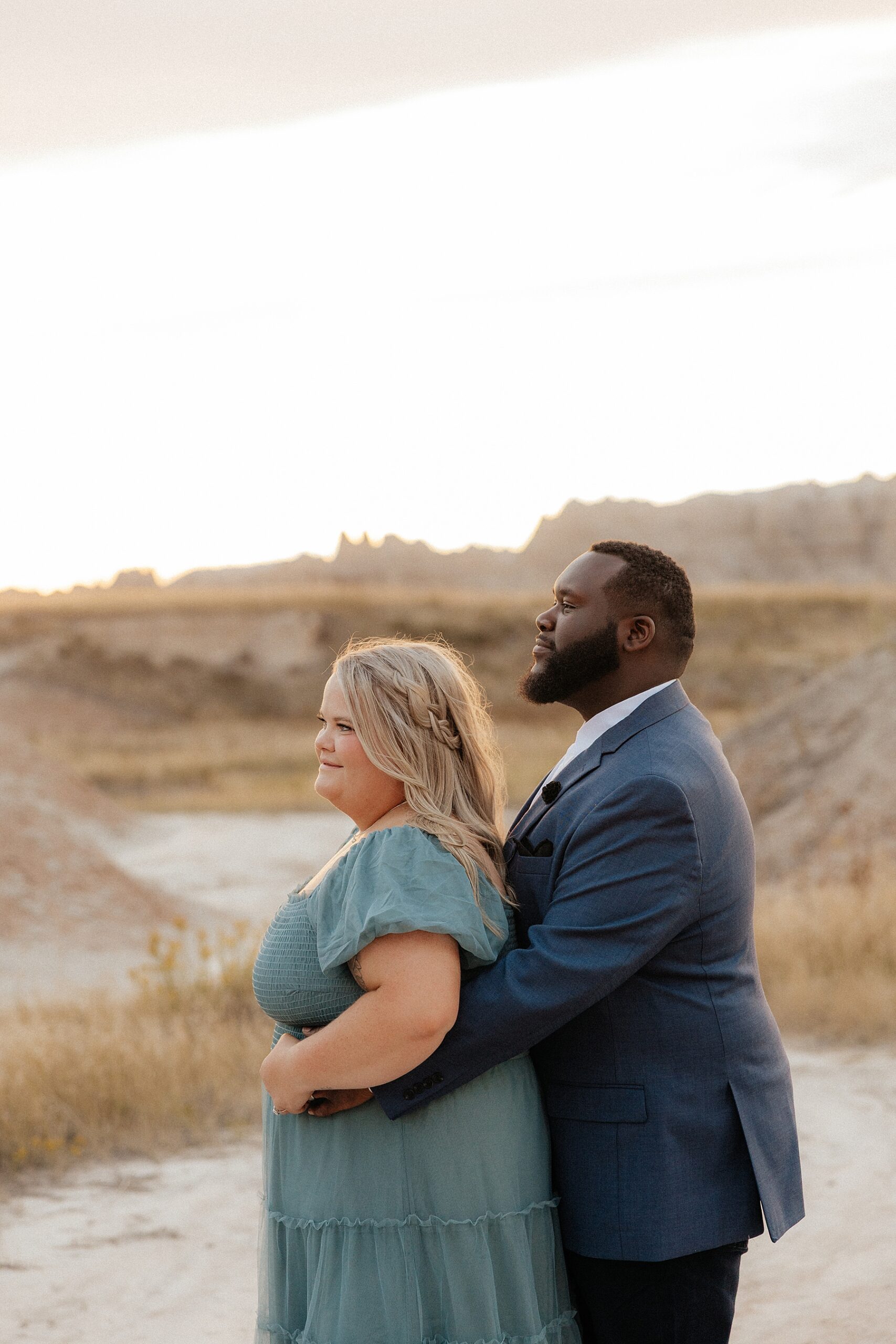
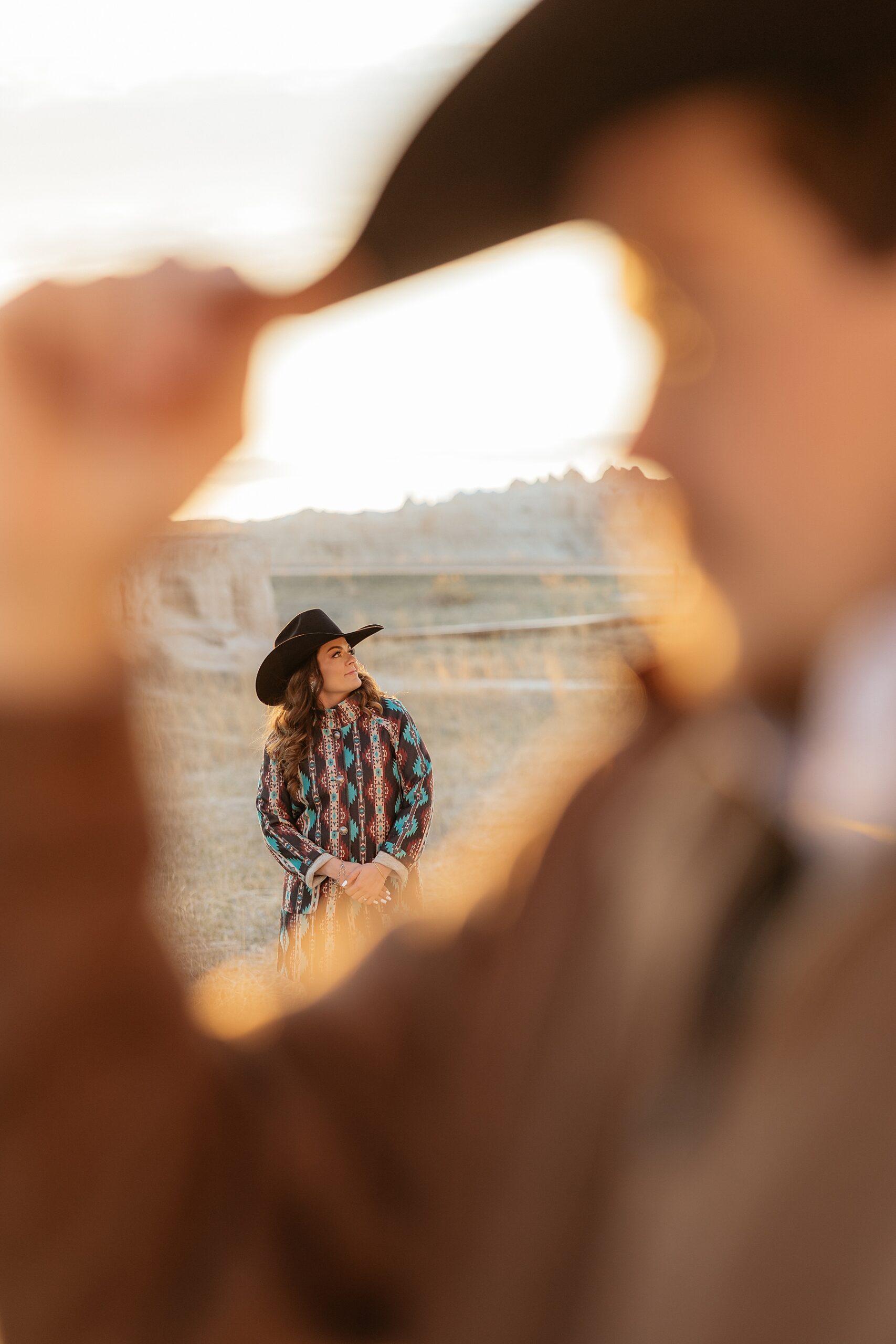
Have Your Portraits Taken by a Local Photographer
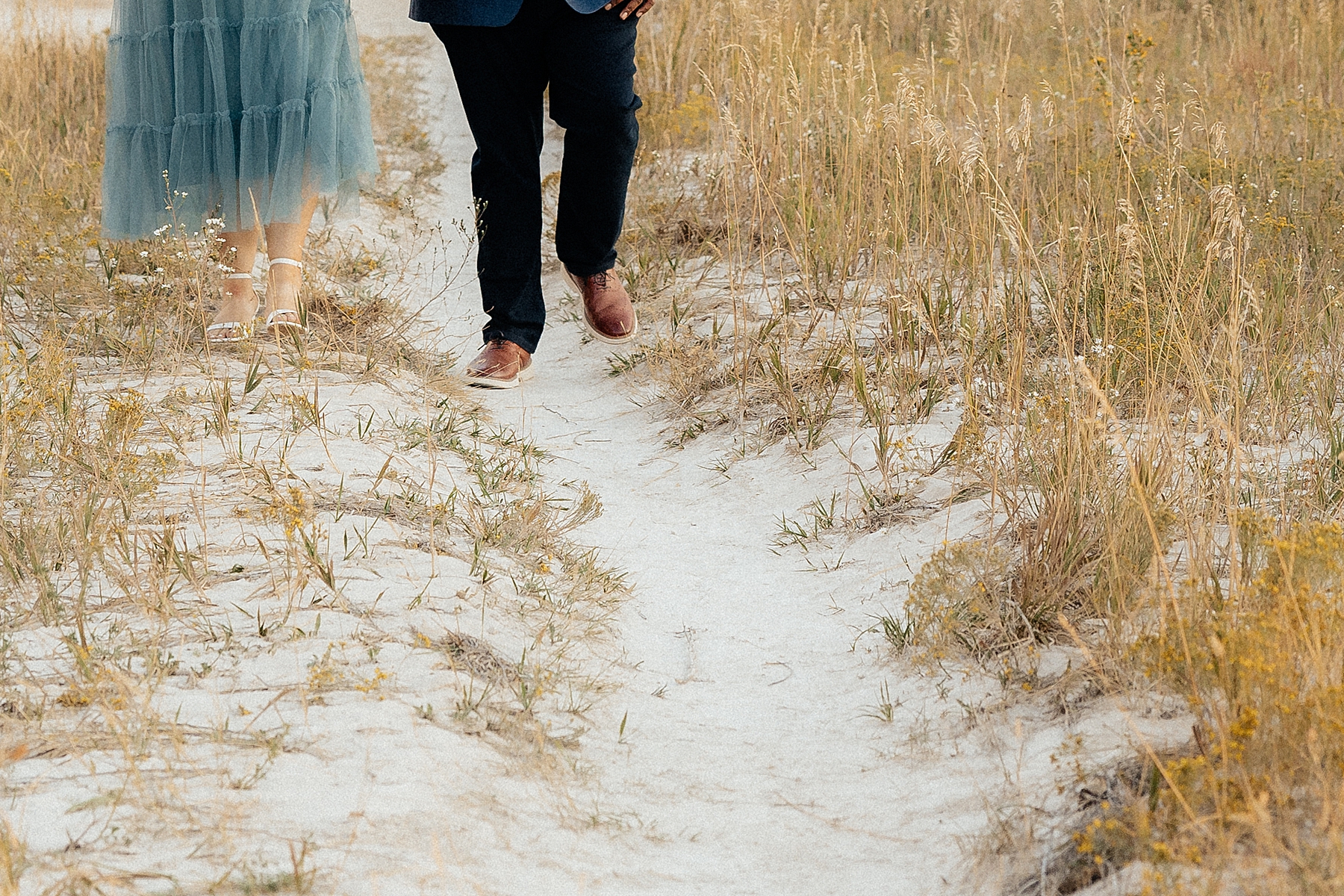
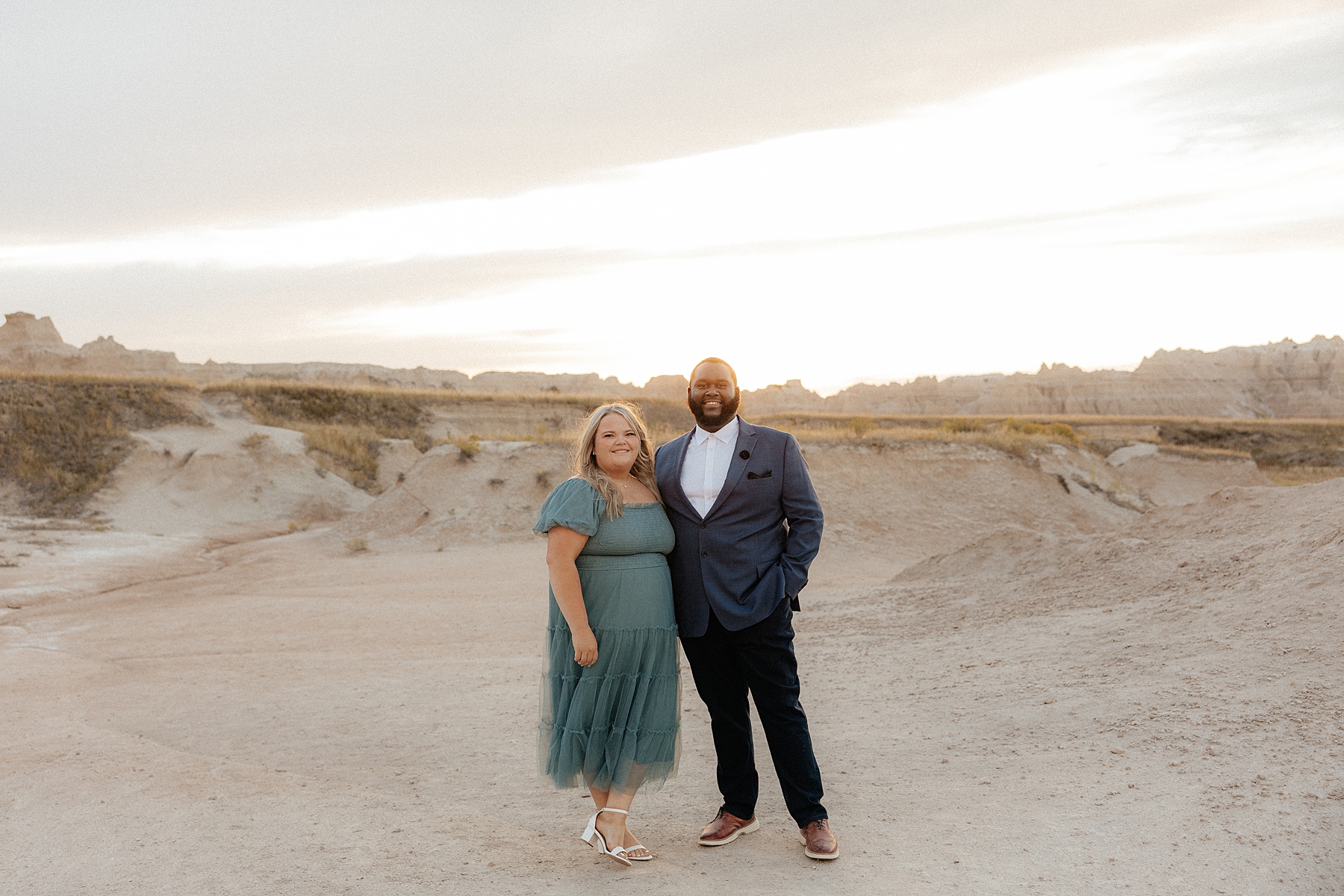
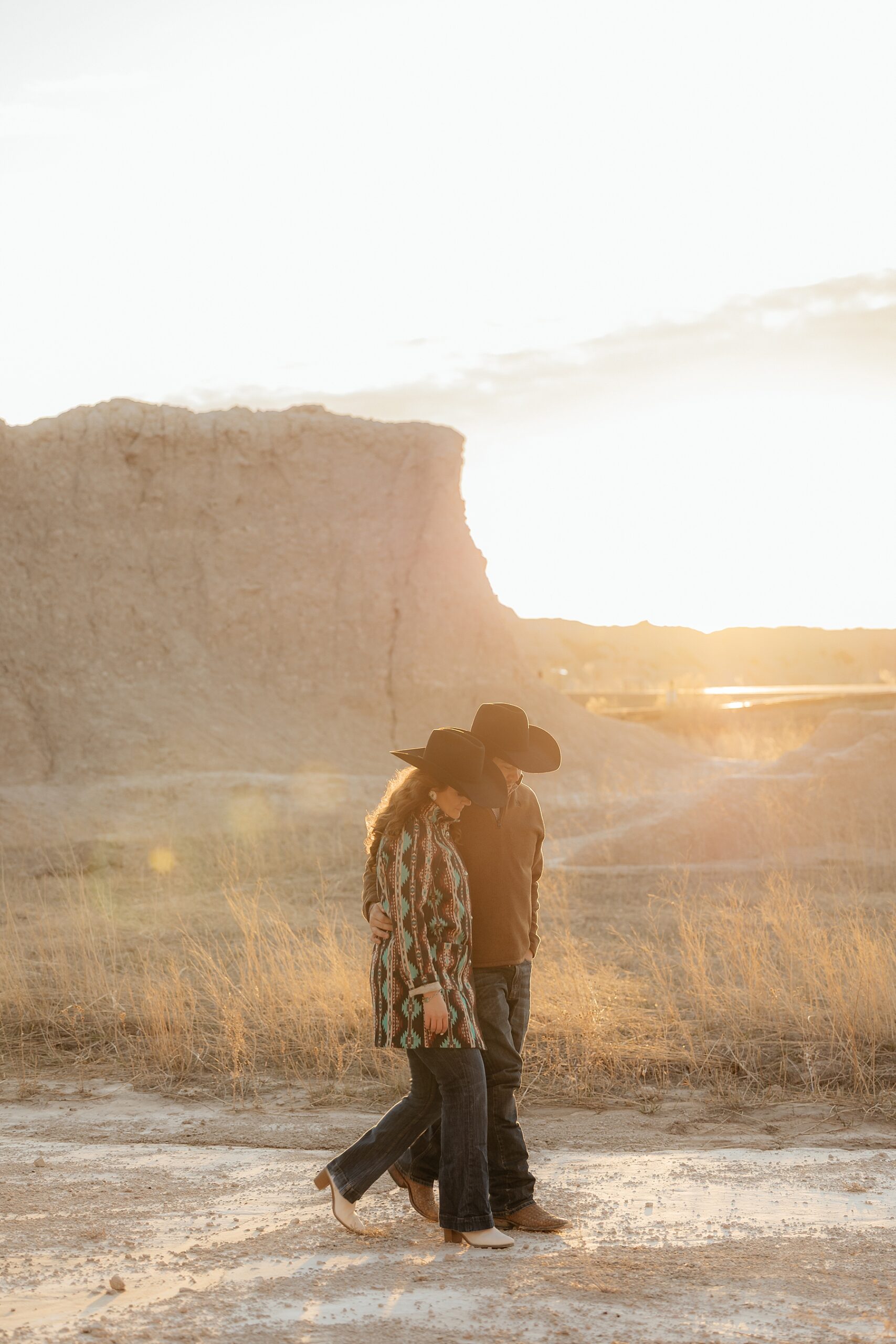
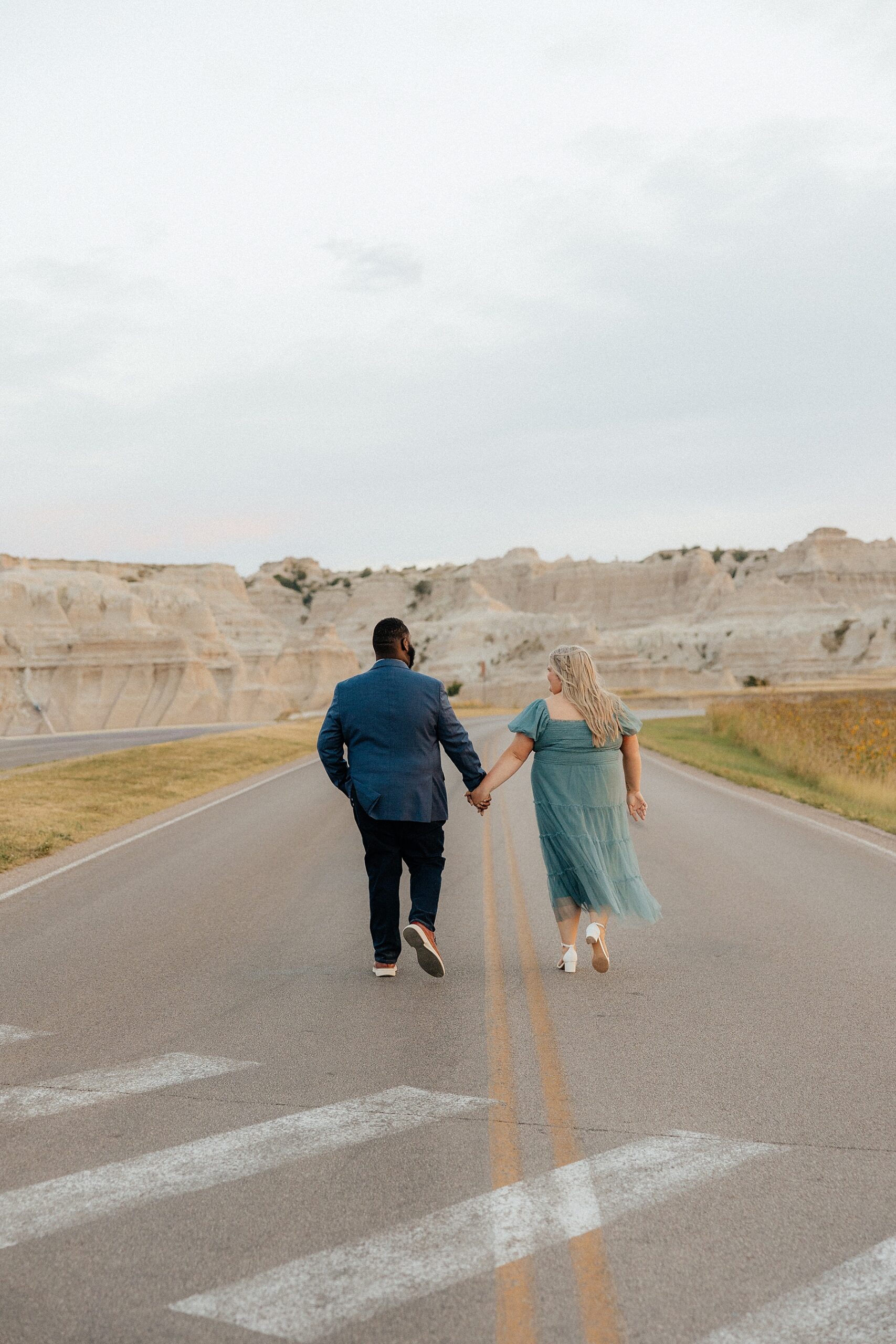
The Badlands offer one of the most beautiful natural backdrops in South Dakota. Evening light creates warm tones across the formations, and there are many quiet locations perfect for couples or families. As a local photographer, I guide visitors to scenic spots that allow for relaxed, natural portraits surrounded by the unique landscape. If you want to schedule a portrait session during your visit to the Badlands, reach out here!
11. Best Hikes in Badlands National Park
Badlands National Park offers trails for every comfort level, from easy boardwalks to steep climbs and long prairie routes. The terrain can be rugged, exposed, and uneven, so choosing the right hike helps you enjoy the beauty of the park safely.
Below is a refined and expanded guide to the most popular trails, including distances, difficulty levels, terrain notes, and who each hike is best for.
Notch Trail
Distance: 1.3 miles round trip
Difficulty: Moderate
Best for: Adventurous hikers, visitors comfortable with heights
The Notch Trail is one of the most iconic hikes in the park. It begins in a canyon before reaching the famous wooden ladder, which leads hikers up to a narrow ledge. From there, the trail continues along the cliff edge and ends at a stunning viewpoint overlooking the White River Valley.
Terrain Notes:
- One wooden ladder climb
- Exposed cliffside section
- Loose gravel in places
Safety Tips:
- Avoid during high winds
- Wear sturdy footwear
- Keep children close
Door Trail
Distance: 0.75 miles round trip
Difficulty: Easy
Best for: Families, casual hikers, photographers
Door Trail begins with an accessible boardwalk that leads to an opening in the Badlands Wall. From the end of the boardwalk, hikers can explore an open area of unique formations marked by numbered posts.
Terrain Notes:
- Boardwalk + rocky open terrain
- Minimal elevation change

Window Trail
Distance: 0.25 miles round trip
Difficulty: Easy
Best for: Quick stops, sunrise watchers
This short boardwalk leads to a natural window in the formations, framing a dramatic view of the landscape. It’s an ideal stop for sunrise or families.
Saddle Pass Trail
Distance: 0.7 miles round trip
Difficulty: Strenuous
Best for: Experienced hikers, those wanting elevation
Though short, Saddle Pass climbs sharply up the Badlands Wall. The steep incline and loose gravel make this a challenging hike but reward hikers with expansive views from the top.
Terrain Notes:
- Very steep
- Loose footing
- Exposed to sun and wind
Fossil Exhibit Trail
Distance: 0.25 miles round trip
Difficulty: Easy and fully accessible
Best for: All visitors, especially families
This boardwalk trail offers fossil replicas and interpretive signs. It’s a gentle, educational walk suitable for anyone, including those using mobility devices.
Castle Trail
Distance: 10 miles round trip
Difficulty: Moderate
Best for: Experienced hikers, solitude seekers
As the longest marked trail in the park, Castle Trail provides a deep prairie experience. The route travels through open grasslands and along formations, offering expansive views and a sense of peace.
Terrain Notes:
- Mostly flat prairie terrain
- Little shade
- Can be combined with Medicine Root Loop
Medicine Root Loop
Distance: 4 miles round trip
Difficulty: Moderate
Best for: Visitors wanting a quiet prairie walk
This loop branches off Castle Trail and features rolling grassland, distant ridge views, and a peaceful atmosphere. It’s less traveled than other trails, making it perfect for avoiding crowds.
Cliff Shelf Nature Trail
Distance: 0.5 miles round trip
Difficulty: Easy to moderate
Best for: Visitors wanting partial shade and moderate elevation
This short loop includes boardwalks and dirt paths weaving through a small juniper forest. It offers unique scenery compared to other trails in the park.
Backcountry Hiking in the Badlands
Badlands National Park is one of the few national parks that allows open, off trail exploring. Visitors can wander freely across much of the terrain, making backcountry hiking a memorable experience.
What to Expect
- Rugged, uneven surfaces
- Rapid elevation changes
- Little to no shade
- Unpredictable terrain with gullies and ridges
Tips for Safe Backcountry Exploration
- Use the AllTrails app with offline maps. Even though off trail travel is allowed, this helps prevent accidentally entering difficult areas.
- Bring plenty of water and sun protection.
- Go slowly to avoid slipping on loose gravel.
- Mark your car location before beginning.
Because the landscape is visually repetitive, it is easy to become disoriented without a navigation tool.
Safety and Hiking Tips
The Badlands are beautiful but exposed. Careful preparation makes your visit safer and more enjoyable.
1. Pack More Water Than You Think You Need
Dry air and sun exposure increase dehydration risk, especially in summer.
2. Start Early
Morning temperatures are cooler, and wildlife is more active. Sunrise also offers the best light for photography.
3. Wear Proper Footwear
Loose gravel is common. Hiking shoes with traction provide stability.
4. Check Weather Conditions
Storms can develop quickly. Leave exposed areas if lightning appears.
5. Watch for Wildlife
Give all animals generous space, especially bison and bighorn sheep.
6. Know Your Limits
Some trails become extremely hot midday. Save strenuous hikes for early or late hours.
12. Wildlife in Badlands National Park
Badlands National Park supports a wide range of wildlife, and sightings often enhance the visitor experience.
Bison
Common along Sage Creek Rim Road, bison roam freely and may cross roadways without warning. Observe from a safe distance.
Prairie Dogs
Active and vocal, prairie dogs gather in large colonies near the Pinnacles Entrance and throughout the western part of the park.
Bighorn Sheep
Look for them on rocky slopes and ridges. They are agile climbers and photogenic animals to observe from afar.
Pronghorn
Often seen in open prairie areas, pronghorn are the fastest land animals in North America.
Coyotes
More likely heard than seen, coyotes are active during sunrise and sunset.
Rare Species
The park is home to the endangered black footed ferret, though sightings are uncommon.
13. Plants and Prairie Ecology
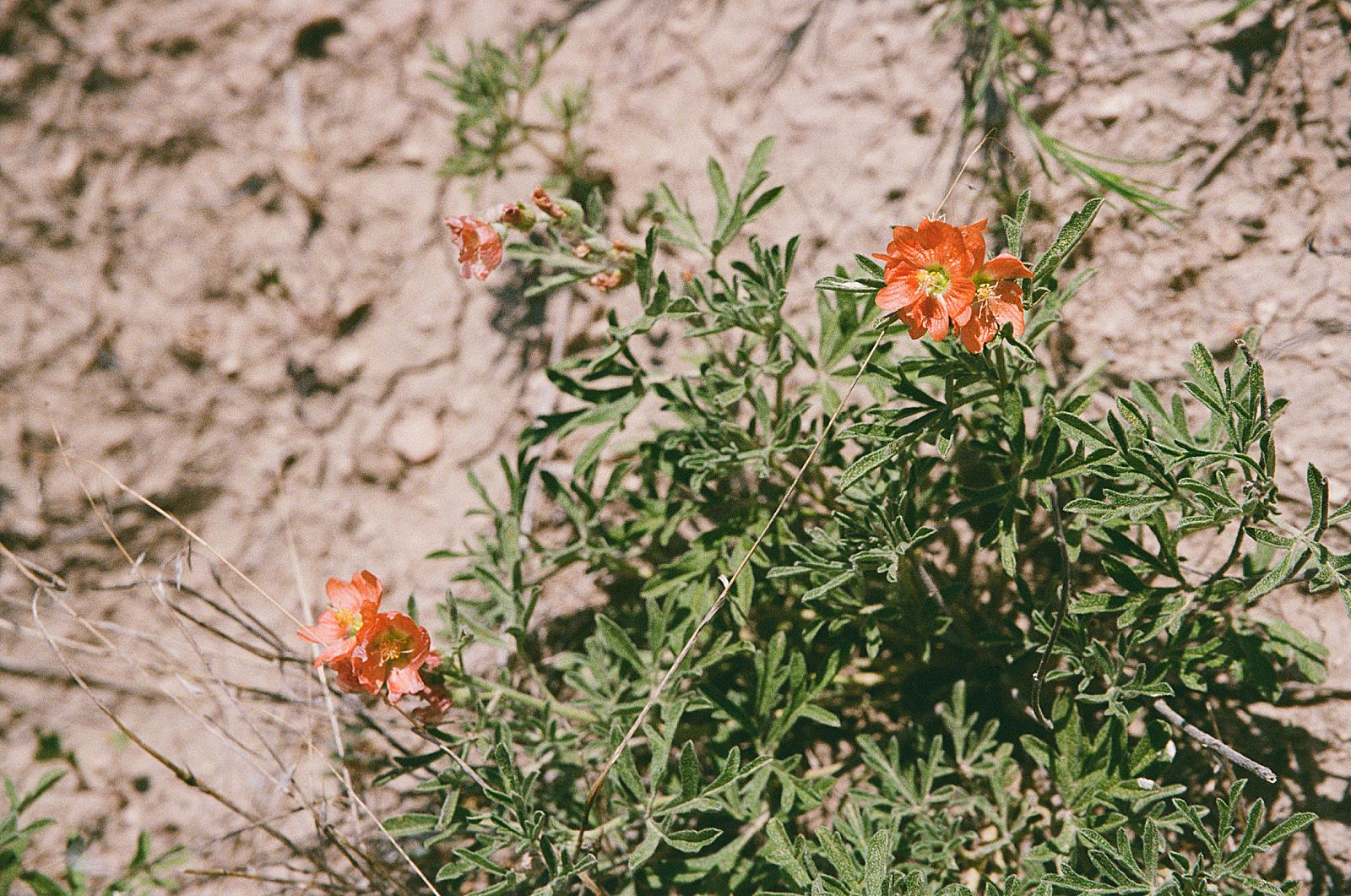
The mixed grass prairie surrounding the formations is a key feature of the park. Depending on the season, you might see:
- Needle and thread grass
- Little bluestem
- Prairie coneflowers
- Purple clover
- Seasonal wildflowers
This prairie supports the park’s diverse wildlife population and brings color and softness to the rugged formations.
14. Badlands Accessibility Guide
Badlands National Park aims to make its scenery, overlooks, and educational experiences accessible to as many visitors as possible. While some areas are rugged, several features support visitors with limited mobility.
Accessible Trails
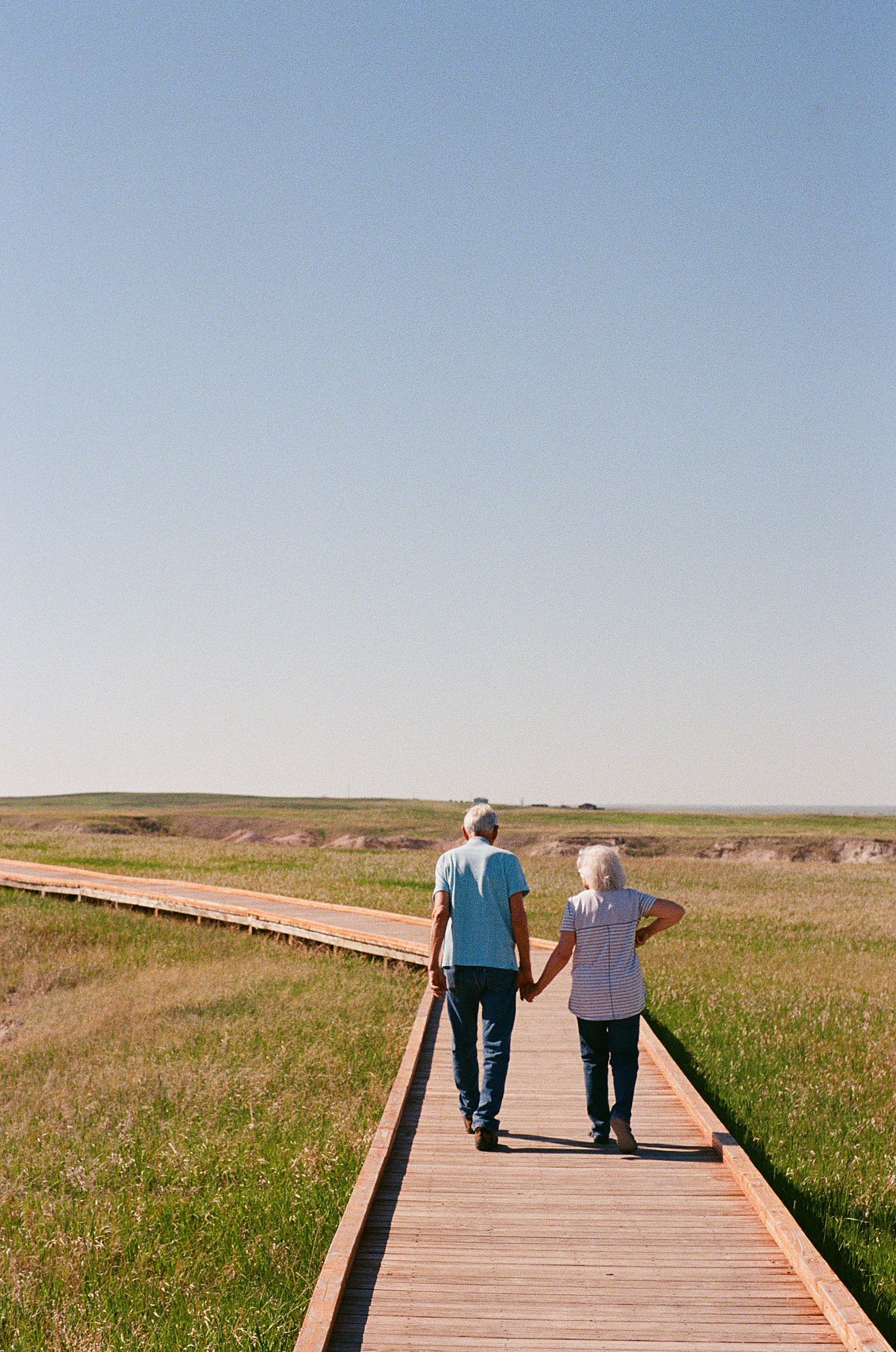
- Fossil Exhibit Trail: Fully accessible boardwalk
- Door Trail (first portion): Accessible boardwalk with views of the Badlands Wall
Both trails offer excellent scenery without uneven surfaces.
Accessible Overlooks
Many overlooks along the Scenic Loop Road offer accessible parking and flat viewing areas, including:
Visitor Center Accessibility
Ben Reifel Visitor Center features:
- Accessible entrances
- Accessible restrooms
- Climate controlled exhibits
- Educational displays at comfortable heights
Additional Tips
- Visit early or late to avoid peak heat
- Some picnic areas are accessible
- Bring extra water, even for short outings
15. Driving Through the Badlands
Driving is one of the best ways to experience the park’s variety. The landscape changes dramatically as you travel from one overlook to another, offering new colors, textures, and terrain at every turn.
Starting from the Northeast Entrance
The drive begins with immediate access to dramatic views. Big Badlands Overlook and the trail area around the Door and Window Trails are only minutes from the entrance.
Middle Section of the Loop
Here, wide prairie stretches open between ridges of formations. This quieter section of the park is excellent for photography and slow scenic driving.
Approaching the Pinnacles Entrance
As you head west, you’ll reach Pinnacles Overlook and nearby prairie dog towns. Wildlife activity often increases in this area, making it a good time to slow down and watch the landscape.
Optional: Sage Creek Rim Road
For a more rustic driving experience, follow this gravel road into open grasslands where wildlife is abundant. Bring water and check weather before traveling on gravel roads after storms.
16. What to Pack for the Badlands
The Badlands are exposed, sunny, and often windy. Packing properly ensures a comfortable and safe trip. Here is what to bring for each season.
Summer Packing List
Best for June through August
- Lightweight, breathable clothing
- Wide brimmed hat
- Sunglasses
- Mineral sunscreen
- Hydration pack or multiple water bottles
- Sturdy hiking shoes
- Snacks or energy bars
- Lightweight rain jacket (summer storms form quickly)
- Small backpack for day hikes
Tip: Hike early or late to avoid peak heat.
Fall Packing List
Best for September and October
- Layered clothing for shifting temperatures
- Light fleece or jacket
- Closed toed hiking shoes
- Hat and sunscreen
- Water bottle or hydration pack
- Camera or binoculars for fall wildlife activity
Tip: Bring a warm layer for evening sunsets.
Spring Packing List
Best for April and May
- Waterproof or wind resistant jacket
- Layered clothing
- Hiking shoes with traction
- Hat and sunscreen
- Plenty of water
- Binoculars for spotting early season wildlife
Tip: Seasonal rains can create muddy patches on trails. Wear shoes you don’t mind getting dirty.
Winter Packing List
Best for November through March
- Insulated winter coat
- Hat, gloves, and scarf
- Thermal layers
- Waterproof boots
- Wool socks
- Thermos with warm drink
- Emergency kit for winter driving
- Extra snacks and water
Tip: Check road conditions before traveling, especially after snow or ice.
Helpful Items Any Time of Year
- Portable phone charger
- First aid kit
- Map or downloaded offline AllTrails map
- Reusable utensils or picnic supplies
- Small blanket for sunset watching
- Camera for sunrise and evening light
17. Food and Dining Availability
There are limited food options inside the park, so most visitors bring snacks or picnic supplies.
Inside the Park
- Cedar Pass Restaurant: Simple meals including salads, sandwiches, and local options
- Cedar Pass Lodge Store: Snacks, drinks, convenience items
Nearby Towns
- Wall, SD: Fast food, cafes, and restaurants
- Interior, SD: Small local dining options
- Rapid City, SD: Full range of restaurants and grocery stores
Because of the limited availability within the park, packing your own cooler is often the most convenient choice.
18. Camping and Lodging Near the Badlands
Where you stay during your visit can shape your overall experience. Badlands National Park offers a mix of in-park lodging, rustic camping, and nearby town accommodations that suit different travel styles and comfort levels.
Cedar Pass Lodge (Inside the Park)
Location: Near the Ben Reifel Visitor Center
Best for: Visitors wanting sunrise access, families, photographers, and those who prefer modern amenities
Cedar Pass Lodge offers updated cabins with climate control, bathrooms, and comfortable beds. Many cabins sit in view of the Badlands formations, giving you a peaceful place to watch morning or evening light.
Pros:
- Walkable to visitor center and several trailheads
- Incredible sunrise visibility
- Modern comforts in a natural setting
Cons:
- Limited availability during peak season
- Higher cost compared to town lodging
Cedar Pass Campground (Inside the Park)
Location: Near Cedar Pass Lodge
Best for: Travelers wanting a balance of convenience and immersion
This developed campground offers tent and RV sites, restrooms, and seasonal showers. With open views across the formations, it is one of the most scenic camping options in South Dakota.
Pros:
- Great sunrise views
- Central location
- Amenities nearby
Cons:
- Almost no shade
- Can be windy
Sage Creek Campground (Inside the Park)
Location: Along Sage Creek Rim Road
Best for: Visitors seeking rustic camping and wildlife encounters
Sage Creek Campground is free, first come first served, and much more remote. Bison roam freely through the area, and nights feel dark and peaceful.
Pros:
- Free to camp
- Exceptional wildlife viewing
- Quiet and remote
Cons:
- No water access
- Basic pit toilets
- Gravel road access only
Lodging in Nearby Towns
If you prefer hotel comforts or easier access to restaurants, staying outside the park is an excellent choice.
Wall, South Dakota
Distance: 10 to 15 minutes
Pros:
- Closest town to the park
- Multiple hotels and motels
- Restaurants and convenience stores
Wall is ideal for visitors who want a simple, convenient base.
Rapid City, South Dakota
Distance: 55 to 70 minutes
Pros:
- Wide range of hotels and dining
- Best option if combining a Badlands trip with Black Hills attractions
Rapid City works well for families or longer vacations.
Interior, South Dakota
Distance: 5 to 10 minutes from Interior Entrance
Pros:
- Small motels and campgrounds
- Quiet setting
- Quick access to the park
Interior is great for those wanting to stay close without relying on the areas near Wall.
19. How to Get to Badlands National Park
Badlands National Park is most commonly accessed by car, but nearby airports and highways make it easy to reach from various directions.
Closest Airport
- Rapid City Regional Airport (RAP)
Distance: About 1 hour from the Northeast and Pinnacles Entrances
This airport provides rental cars and serves visitors flying in from major U.S. cities.
Driving from Popular Areas
- Rapid City to Northeast Entrance: ~60 minutes
- Wall to Northeast Entrance: ~10 minutes
- Interior to Visitor Center: ~5 minutes
- Mount Rushmore to Badlands NP: ~1 hour 30 minutes
- Custer State Park to Badlands NP: ~1 hour 45 minutes
- Black Hills region: 1 to 2 hours depending on your location
Most visitors combine the Badlands with the Black Hills, making this an ideal road trip region.
20. Mistakes to Avoid in Badlands National Park
Even well-prepared visitors are sometimes surprised by the conditions in the Badlands. Avoid these common pitfalls to stay safe and enjoy your time.
1. Not Bringing Enough Water
Because there is almost no shade, dehydration can happen quickly. Bring more water than you think you’ll need.
2. Hiking in Midday Summer Heat
Start early or go after 5 p.m. Summer afternoons can be intense.
3. Wearing Sandals
Loose gravel is everywhere. Wear closed toed shoes with traction.
4. Ignoring Weather Changes
Storms form fast. If rain or lightning approaches, leave exposed areas.
5. Getting Too Close to Wildlife
Bison and bighorn sheep are powerful animals. Always keep a safe distance.
6. Assuming Cell Service is Reliable
Coverage is spotty. Download offline maps beforehand.
7. Leaving without a Navigation Plan
Backcountry areas look similar and can be disorienting.
Use AllTrails offline maps even for simple exploratory hikes.
21. Badlands National Park Itineraries
Whether you have a single day or several, here are detailed itineraries to help structure your visit.
One Day Itinerary
Morning:
Enter through the Northeast Entrance, stop at Big Badlands Overlook, and explore the Door, Window, and Notch Trails.
Late Morning:
Drive the Scenic Loop and stop at the Fossil Exhibit Trail and White River Valley overlooks.
Lunch:
Eat at Cedar Pass Restaurant or enjoy a picnic.
Afternoon:
Continue westward through Panorama Point, Conata Basin, and prairie dog towns.
Evening:
End at Pinnacles Overlook for a breathtaking sunset.
Two Day Itinerary
Day One:
Follow the one-day itinerary at a relaxed pace. Stay overnight at Cedar Pass Lodge or campground.
After dark, enjoy stargazing. The Badlands have some of the darkest skies in South Dakota.
Day Two Morning:
Hike a longer route such as Castle Trail or Medicine Root Loop.
Afternoon:
Drive Sage Creek Rim Road to view bison and prairie dogs.
Evening:
Return to a quiet overlook like Conata Basin for sunset.
Three Day Itinerary
Day One:
Follow the full one-day itinerary.
Day Two:
Add longer hikes and Sage Creek Rim Road exploration.
Day Three Options:
Choose based on your travel style:
- Backcountry exploring: Wander open terrain using AllTrails offline navigation
- Scenic driving: Revisit your favorite areas in different lighting
- Nearby attractions: Visit Wall Drug, Minuteman Missile Site, or the Black Hills
Evening:
Finish your trip with sunset at your favorite overlook.
22. Nearby Attractions Close to the Badlands
Many visitors combine the Badlands with other unique destinations in western South Dakota.
Wall Drug
A famous roadside attraction with shops, cafés, and local souvenirs. It’s a fun stop for families and great for grabbing snacks or coffee.
Minuteman Missile National Historic Site
Learn about the Cold War and tour preserved missile facilities from a pivotal era in U.S. history.
National Grasslands Visitor Center
Located in Wall, this center highlights prairie ecosystems and offers interpretive displays.
The Black Hills
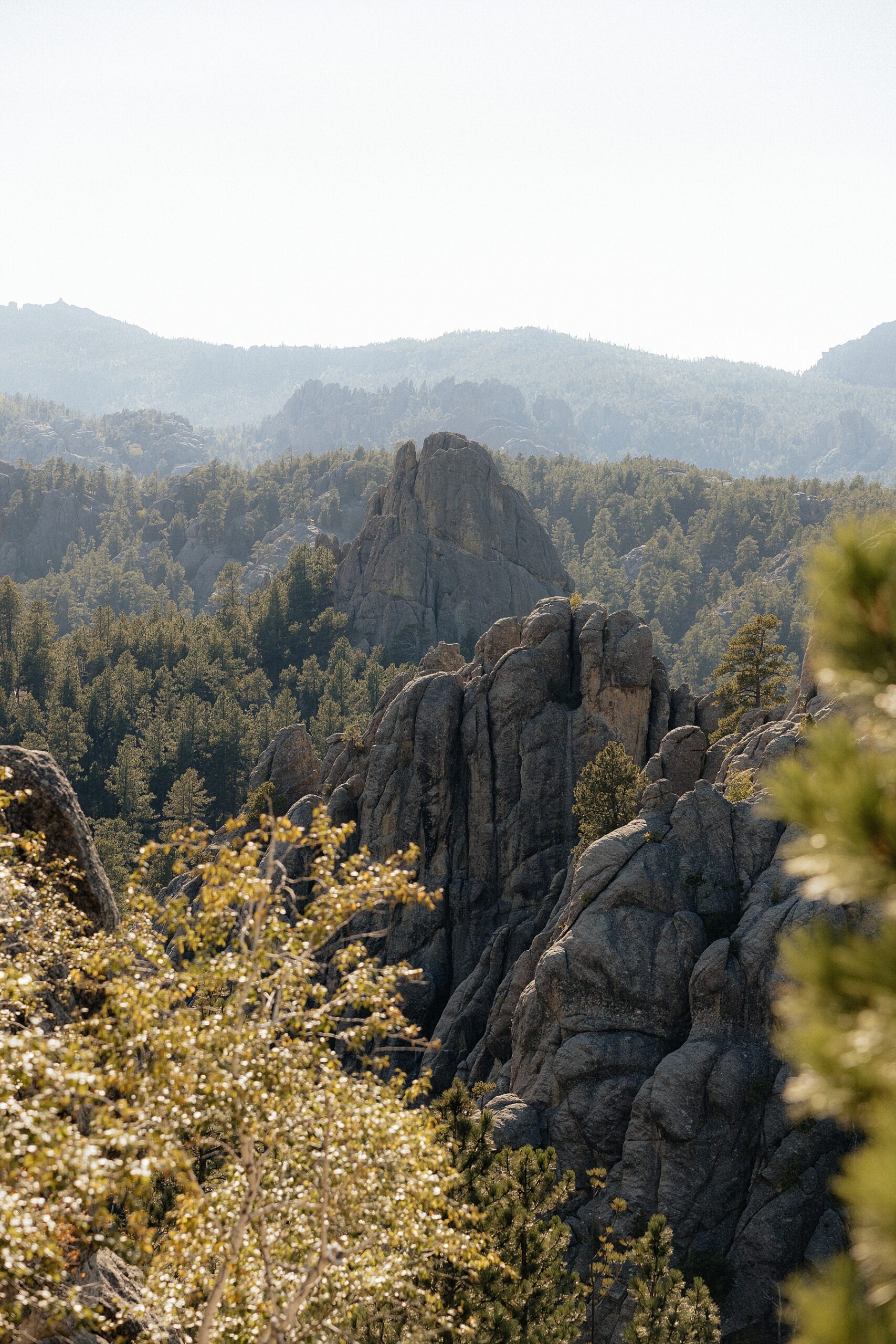
Just over an hour away, the Black Hills offer forests, lakes, scenic drives, and iconic landmarks, including:
This region pairs beautifully with a Badlands itinerary.
23. Practical Travel Tips for Visiting
- Start early or stay late: Light is better and temperatures are more comfortable.
- Keep your gas tank above half: There are no gas stations in the park.
- Expect strong winds: Secure hats and loose items.
- Bring more water than expected: Especially in summer.
- Slow down: Wildlife may appear on or near the road.
- Check weather before gravel drives: Roads can become soft after rain.

24. Ready to Plan Your Badlands National Park Trip
Badlands National Park is one of the most unforgettable landscapes in South Dakota. Its sharp ridges, layered formations, wide open prairies, and vibrant sunrises make it a place that feels both peaceful and awe inspiring. No matter how many times you visit, the Badlands offer something new each time. Light changes the colors, clouds shift the mood, and wildlife moves across the prairie in ways that continually reshape the experience.
If you have dreamed of portraits in this incredible setting, I would love to guide you. As a local photographer, I help couples and families explore peaceful areas of the park where they can enjoy the scenery and create timeless images together. The Badlands offer some of the most extraordinary light and backgrounds in South Dakota, making it a meaningful place to capture your story.
To continue planning your experience, explore the blog, browse my photography services, or reach out with questions. I’m always happy to help visitors make the most of their time in this beautiful corner of the Midwest.
Leave a Reply

About Charity Dowell
Black Hills Photographer

I’m a Rapid City-based wedding and portrait photographer capturing love stories throughout the Black Hills and beyond. My work blends an intentional eye with a heart rooted in Christ — always seeking beauty in stillness, meaning in the in-between, and honesty in every frame. I believe marriage is sacred, and your story deserves to be told with grace, care, and a touch of poetry.
More About me

Explore
Recent Posts
Ready to work together?
If your heart is already imagining what your photos and film could feel like, I’d love to hear from you. Share your plans, questions, or even the earliest ideas. Reach out through the contact form, and I’ll respond soon so we can begin shaping an experience that feels personal and meaningful to you.


Leave a Comment